The Yoga Bridge, Week 60, December 28, 2014, Yoga Without Ethical Living And Self Disciplines Is Just Acrobatics.

The actual quote is from the book, Light On Yoga, by B.K.S. Iyengar, in the first paragraph under Yogasanas. Note, some of the words in the title were changed in the following quote.

” The practice of Asanas without the backing of Yama and Niyama is mere acrobatics.”

Most people in America think yoga is only poses and that is false. A valid question, how could living ethically and self disciplines affect yoga practice? Yoga is a process of true self realization. This process could take decades with constant right yogic practice. In the short term, I believe when a student of yoga follows ethical living and the self disciplines, the negativity of the mind and body start to exit. The mind and body will become purified and clearer. For example, If a person who ate and drank only junk food all their lives and then started eating healthy food, their body and mind would start to purify and become health. This lifestyle would improve their bodies ability; hence, yoga practice. Right thinking, right living, right disciplines brings healthy energy which causes self transformation over time.

So ethical living is 1) non violence. 2) truthfulness 3) non stealing 4) non hording
5) committed relationship or celibacy. When one examines each one, it will be discovered, for example, non violence, means more than refraining from physically harming. There are internal thoughts which could be harmful, or the purchase of an item where an animal was mistreated or forced labor.

There are five disciplines, 1) non attachment 2) cleanliness 3) dedicated training 4) study of religious text 5) surrendering to God. Start with the religion you were born into.

The Yoga Bridge, December 19, 2014. Tadasana

For those that don’t know Tadasana, translation Mountain pose, is a standing pose. It appears to be a simple pose but it is not. It requires equal balance on the balls and heals of the feet along with correct spinal alignment. Stillness.

This week, a remark that rings through my mind from the head teacher at the yoga studio, ” I met and practiced yoga with B.k.s. Iyengar four times in my life. Each time we worked on Tadasana.” In one of the classes, Iyengar explained, ” With mastery of Tadasana, you will be able to do a lot of other poses. The problem with students is that they rush to the more advanced poses without mastering the art of standing correctly. This is a house built on a faulty foundation.” I thought to myself, ” If the yogi said to focus on Tadasana, we had better listen and follow his instruction.”

After the remark on Tadasana, she called out two long time student as models. They demonstrated the pose as we all critiqued them. The first one had a pelvic tilt and was on the balls of the feet. She adjusted her and she almost fell. The other student teacher had her arms to forward.

Tadasana was a complex pose despite its appearance. A few years ago, an advanced student demonstrated how to stand on three points on the foot. She demonstrated it. Her foot didn’t look human. The way her foot made contact with floor was like the talon of hawk. I had never seen anything like this.

After two years, I could stand in Tadasana without swaying; however, I needed a lot of conscious effort. My spinal alignment wasn’t the best. This will be a pose to focus on for 2015.

/home/wpcom/public_html/wp-content/blogs.dir/6f8/59577596/files/2014/12/img_4569.jpg

The Yoga Bridge, Week 55, November 27, 2014, Good News!

Good news!  A relative gifted another year of unlimited yoga. This will be the third year of yoga. I will continue writing the blog for another year or longer. After the third year, I will probably start studying for teacher certification.

Right now, Yoga is the counter weight to my other activities.

And of course some weirdness, I have read that a re-occurring pain or a body scar may be from a past life as per the scar on the center of my forehead. Tilak?


IMG_4458.JPG

The Yoga Bridge, Week 52, The Pains Which Are Yet To Come Can Be And Are To Be Avoided.


As per the title, I came across this fantastic sutra while looking through the Sutras of Patanjali.  If you practice yoga, you should immediately be learning about the eight steps a.k.a. eight limbs.  This statement isn’t a belief but a truth. Yoga leads to less suffering in life.


ii.16        heyam duhkham anagatam.


English translation:  The pains which are yet to come can be and are to be avoided.

Light on the Yoga Sutras of Patanjali,page 123.  explanation.   Past pain is finished.  Pain that we are in the process of experiencing cannot be avoided, but can be reduced to some extent by yogic practice and discriminative knowledge. Unknown future pains can be prevented by adhering now to yogic discipline.

I would take the yogic discipline as the eight limbs but mainly yama, ethical conduct,  and niyama, self-restraint. The Sutras of Patanjali is a treasure and given freely.  The sutras are a great aid, guide, to living and is universal.  We should live by the following:

Ethical conduct which is

1) Non violence

2) Truthfulness

3) Non stealing

4) Chastity or faithfulness to one partner

5)  Non possessiveness.


Self Restraint which is:

1) Cleanliness

2) Non attachment

3) Discipline to do the work

4) Self study of scripture

5) Surrendering to God.

6) Non use of alcohol or mind altering drugs.


And the other steps which I would loosely state:

1) Yogic postures

2) Yogic breathing

3) Meditation

4) Living completely in the present.


The Yoga Bridge Week 49, October 10th, 2014, Re incarnation

IMG_2908

When I was eighteen, I didn’t have a clear identity. I thought it was a problem. Worse, I thought there was something wrong with me. I always felt there was more than what I was born into, and more than my career. Religion did offer a tiny bit of relief, but was I following the right path?

Sadhguru, an Indian spiritual leader, said on a youtube video reference a question about reincarnation, when reincarnated, it was not a random event, you were born into a carefully selected person or other. Why? So that the soul could keep developing.

As far as being reincarnated as a Human being, there is no worse animal because of the potential for acting wickedly on regular basis. In each one of us, there is potential for good and evil. Everyday we have thousands of decisions that affect ourselves and others around us.

According to an article from Sanskriti magazine, The Vedas, ancient Hindu religious texts mentioned that other races of beings exist in the Universe much much more developed than us. Another seemingly disconnected thought, I don’t know how scientists measured the length of the universe but I read that to cross from one end to the other would take 100,000 years at the speed of light. There are more planets than grains of sand on the Earth. To add to the complexity, I hadn’t brought up that the Buddha mentioned there were other dimensions or planes. How about quantum physics? If it was in the Vedas and the Buddha mentioned it, it was truth. Anything and everything is possible in our wonderful Universe. Most certainly, I believe in reincarnation.

The Yoga Bridge, Week 46, Sept 12, 2014. Turiya

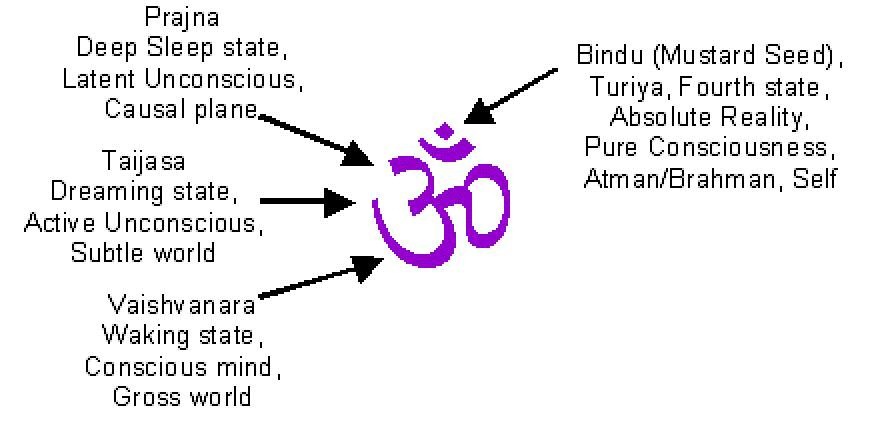
I spend a lot of time wondering about the soul, turiya.  Will I ever witness the soul?

During times of extreme stress,  I try to step out of the situation, view myself in the third person. I know, or trust, that it is not the real me, my body and social identity. What keeps me so attached to the situation?

IMG_4226.JPG

The Yoga Bridge, Week 45, Sept 6, 2014, First Time Official Pranayama

Almost two years of regular practice, at my home, I took my first class of pranayama with an advanced Iyengar certified yoga instructor. A lot of people had thought Prana to be about the management of breath, but if you look at breath, what was breath? It was Energy. So, Pranayama was the management of energy.

The yoga instructor said there was a large part of our lungs that we don’t utilize. We wanted to utilize this area with deep belly breathing. So, We did an inclined pranayama. The legs were on the floor while the chest was supported by A bolster and a folded yoga blanket to support the back of the neck on top of the bolster.

We did a slow inhale. Then stopped. I inhaled more. I did it two more times. My stomach blew up like a balloon. We then did a slow raspy exhale. After five cycles, I was in a dream state, not a sleep not awake.

The yoga instructor then read something that Guruji had written about the feeling of negativity while doing pranayama. What She was reading was exactly what I had experienced. The goal was to see the negativity and use yoga to make it positive.

The Yoga Bridge Week 44, August 29, 2014. The Death Of Our Leader

When I heard that B.K.S. Iyengar died, sadness, worry, then I immediately thought of a text that I had read called the Buddha’s Farewell, the last lecture of the Buddha.

Even though Iyengar has passed on, he left us plenty of tools to continue on with yoga. I saw parallels. Note in the lecture, Ananda was Buddha’s head disciple. Monks were called bhikkhus. The text read as follows:

THE BUDDHA’S FAREWELL

WHEN the Blessed One had remained as long as he wished at Ambapali’s grove, he went to Beluva, near Vesali. There the Blessed One addressed the brethren, and said: “O mendicants, take up your abode for the rainy season round about Vesali, each one according to the place where his friends and near companions may live. I shall enter upon the rainy season here at Beluva.”

When the Blessed One had thus entered upon the rainy season there fell upon him a dire sickness and sharp pains came upon him even unto death. But the Blessed One, mindful and self-possessed, bore his ailments without complaint. Then this thought occurred to the Blessed. It would not be right for me to pass away from life without addressing the disciples, without taking leave of the order. Let me now, by a strong effort of the will, subdue this sickness, and keep my hold on life till the allotted time have come.” And the Blessed One by a strong effort of the will subdued the sickness, and kept his hold on life till the time he fixed upon should come. And the sickness abated.

Thus the Blessed One began to recover; and when he had quite got rid of the sickness, he went out from the monastery, and sat down on a seat spread out in the open air. And the venerable Ananda, accompanied by many other disciples, approached where the Blessed One was, saluted him, and taking a seat respectfully on one side, said: “‘I have beheld, Lord, how the Blessed One was in health, and I have beheld how the Blessed One had to suffer. And though at the sight of the sickness of the Blessed One my body became weak as a creeper, and the horizon became dim to me, and my faculties were no longer clear, yet notwithstanding I took some little comfort from the thought that the Blessed One would not pass away from existence until at least he had left instructions as touching the order.”

The Blessed One addressed Ananda in behalf of the order, saying: “What, then, Ananda, does the order expect of me? I have preached the truth without making any distinction between doctrine hidden or revealed; for in respect of the truth, Ananda, the Tathagata has no such thing as the closed fist of a teacher, who keeps some things back.

“Surely, Ananda, should there be any one who harbor the thought, “It is I who will lead the brotherhood,’ or, ‘The order is dependent upon me,’ he should lay down instructions in any matter concerning the order. Now the Tathagata, Ananda, thinks not that it is he who should lead the brotherhood, or that the order is dependent upon him. Why, then, should the Tathagata leave instructions in any matter concerning the order?

“I am now grown old, O Ananda, and full of years; my journey is drawing to its close, I have reached the sum of my days, I am turning eighty years of age. Just as a wornout cart can not be made to move along without much difficulty, so the body of the Tathagata can only be kept going with much additional care. It is only when the Tathagata, Ananda, ceasing to attend to any outward thing, becomes plunged in that devout meditation of heart which is concerned with no bodily object, it is only then that the body of the Tathagata is at ease.

“Therefore, O Ananda, be ye lamps unto yourselves. Rely on yourselves, and do not rely on external help. Hold fast to the truth as a lamp. Seek salvation alone in the truth. Look not for assistance to any one besides yourselves.

“And how, Ananda, can a brother be a lamp unto himself, rely on himself only and not on any external help, holding fast to the truth as his lamp and seeking salvation in the truth alone, looking not for assistance to any one besides himself? Herein, O Ananda, let a brother, as he dwells in the body, so regard the body that he, being strenuous, thoughtful, and mindful, may, whilst in the world, overcome the grief which arises from the body’s cravings. While subject to sensations let him continue so to regard the sensations that he, being strenuous, thoughtful, and mindful, may, whilst in the world, overcome the grief which arises from the sensations. And so, also, when he thinks or reasons, or feels, let him so regard his thoughts that being strenuous, thoughtful and mindful he may, whilst in the world, overcome the grief which arises from the craving due to ideas, or to reasoning, or to feeling.

“Those who, either now or after I am dead, shall be lamps unto themselves, relying upon themselves only and not relying upon any external help, but holding fast to the truth as their lamp, and seeking their salvation in the truth alone, and shall not look for assistance to any one besides themselves, it is they, Ananda, among my bhikkhus, who shall reach the very topmost height! But they must be anxious to learn.”
IMG_3797.JPG

The Yoga Bridge, Week 42, August 15, 2014, Simple Plan To Practice Detachment

” Hey, what are you doing???” I held out a yoga prop for someone behind me. ” Stop handing out props. Yoga is about you. Don’t worry about the person. That is my job! “, sternly spoke the yoga instructor.

Everyone could easily get their own props. The yoga instructor wanted to make a point. Yoga was one of the few things you could be selfish about under the right conditions.

If the hour was free from current responsibility, why waste time thinking about them? If possible, try to make time where you would be free.

Once you have the free time, walking through the yoga studio door could be like a magic portal. Before going in, try to clear the mind by being mindful.  Leave the problems outside. This is a way to detach for a little while.

The Yoga Bridge, Week 41, August 8, 2014. Tight semimembranosus, semitendinosus, and biceps femoris?

A lot of people, myself include, talk about the hamstrings without a clue as to how they function.  Medical text books show the hamstring muscles on paper but which muscles contract and which extends.  How do I know if I have weak hamstring muscles?  Where does the pain come from? 

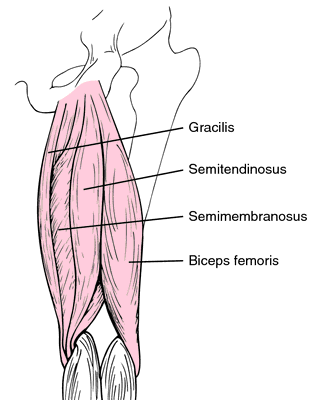
What is the hamstrings anyways?   I used the term hamstrings a lot without much understanding.   ” That area in the back of the legs is commonly known as the “hamstring.”  The primary muscles of the “hamstring” group are semimembranosus, semitendinosus, and biceps femoris, located behind the leg, between the buttocks and the knee. Though each muscle can work independently, together they help bend the knee and bring the leg backwards. (And remember, our muscles work synergistically, never individually.)  One muscle of the hamstring group also connects to a ligament that provides stability to the sacroiliac joint, the meeting point of the base of the spine and the pelvic bone.  That same joint affects numerous important primary mover muscles in our backs. (Tight Hamstrings: Causes, Treatment, and Prevention by Andrew Duffy, NASM-CPT, PES July 27 2009)   The tightness may be caused by 1) muscle weakness, 2) Pelvic tilt.  When you have these two conditions, this may result in back pain because the back incorrectly compensates for the conditions.  

So what can Anyone do to gain more flexibility and eliminate pain?  F.Y.I, I still don’t have a clear picture of how the muscles work together.   Anyways, I did a you tube search and found a video that I liked.  

” 3 poses To Improve Hamstring Flexibility,” by Erkhartyoga.com

http://www.youtube.com/watch?v=aVsCcH_U_kc

 1) Laying down, one leg at 90 degrees,   the other straight with toes pointing up. You will need a rope. Lift leg to 90 degrees, or as close as possible, and the other leg straight, tadasana leg, 1 min both legs. ••• However, I recommend letting go of the belt after 15 seconds letting and maintain the posture for 45 seconds. I believe this will strengthen the muscles. This was something I discovered and was not part of the video.

2) Forward bend.   Uttanasana,

3) Half splits.  Arda hamasana.

As always, I am not a doctor nor a certified Iyengar yoga instructor, at least not yet.  You should seek consul and instruction from the proper source.

This blog is for information only.

IMG_3838.PNG

Previous Older Entries Next Newer Entries