The Yoga Bridge, Week 30, May 22, 2014

20140528-110729-40049475.jpg

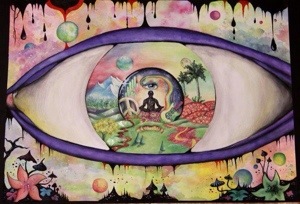
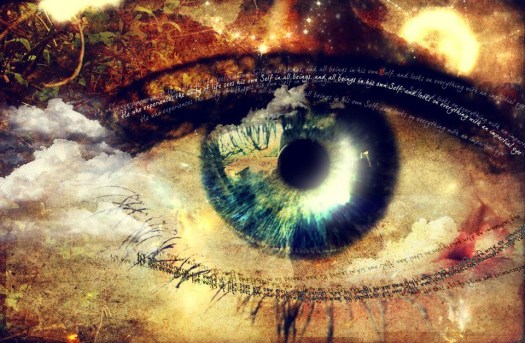
This photo summaries the yogic transformation that is occurring.

“Hypocrisy, pride, self-conceit, wrath, arrogance and ignorance belong, O Partha, to him who is born to the heritage of the demons.” ~ The Gita, XVI. 4

I thought this quote to be interesting.

The Yoga Bridge, Week 29, May 17, 2014. Rebecca Lerner

20140518-173240.jpg

This week, the yoga was on a whole higher level. It was my first experience with a senior Iyengar instructor, Rebecca Lerner. It was fun and educational.

What did I learn?

Before the Invocation to Patanjali, how to go deeper inwards while in Swastkasana. Focus of the closed eyes on the heart area. The soft, full, touch of hands.  Saluting the inner self, the soul. I felt amazing.

I learned some valuable props for the knee and shoulder, using a yoga strap.

A realization that we need to work more on our core body strength.

Every asana, we should be concerned to have a soft gaze. Never a hard gaze.


Building Up The Core With A Safe Workout

I want to do more in the practice but I lack the ab strength, and I have lower back pain.

Here is a video that I believe is safe for the back and strengthens the muscles.

I recommend only doing one set and adding a set each week.

The Yoga Bridge, Week 28, May 9, 2014, Gomukhasana

20140510-154238.jpg

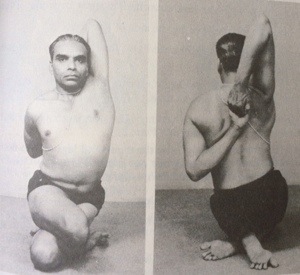
Gomukhasana, The cow pose. As per the photo. Step by step instruction can be found in ” Light On Yoga”, B.K.S. Iyengar, pages 114-116.

” Go means a cow. Mukha means face. Gomukha means one whose face resembles a cow. It also means a kind of a musical instrument, narrow at one end and broad at the other like the face of a cow.

Technique

1. Sit on the floor with the legs stretched straight in front. (Plate 77)

2. Place the palms on the floor and raise the seat.

3. Bend the left knee back and sit on the left foot  from the floor, raise the right leg and place the right thigh over the left one. Raise the buttocks and with the help of the hands bring the ankles and the back of the heels together till they touch each other.

4. Rest the ankles, keeping the toes pointing back.

5. Raise the left arm over the head, bend it at the elbow and place the left palm below the nape of the neck between the shoulders. Lower the right until the right hand is level with and between the shoulder-blades. Clasp the hands behind the back between the shoulders. (Front view: Plate 80. Back view: Plate 81) ”

** This information is for educational purposes only.  Doing yoga without proper instruction from a certified Iyengar teacher could be hazardous to oneself.  If seeking an instructor please see link.  https://secure.iynaus.org/search

When a cow sits down, they fold their legs. If one uses their imagination, the pose has some resemblance. Lately, the yoga studio has been doing this pose in every class.  Every time I did gomukhasana, I immediately felt a lot of pain in the deltoids and in both shoulder blades. A burning pain like a knife plunged into the shoulder-blades. Progress has been slow. After a year and half, not much progress. At present time,  no chance of grasping the fingers.  We use a strap to bridge the gap but its not very satisfying.   I wish I knew what was going on with the shoulders. Scar tissue in the shoulder joints? dislocation? Improper technique? An instructor, whom is a physical therapist,  told me I had lordosis and kyphosis. Is this related to the inability to clasp hands?

My home practices is sporadic. I had done yoga everyday but not a series nor at dawn. Time to get back on the saddle. Creating a home yoga practice will take time, multiple attempts, and perseverance because its a new habit.

Sutras study. I watched a few YouTube videos of people reciting Patanjali’s Samadhi Pada. Ok. It was a bit odd. I doubt that I will do the butchery of Sanskrit pronunciation on YouTube , which could make Patanjali cringe, unless there is a great out pour of blogger support. Learning the Samadhi Pada, unless a break through, will take six months.


The Yoga Bridge, Week 27, May 2, 2014


As we were in an asana, my hands didn’t come together behind my back. I could sense the instructor’s gaze. As I struggled to keep my hands together, I felt her hands forcing my hands together. I immediately thought I would feel a tidal wave of pain because I had tight shoulders and pain in the deltoid. Nada. Zip! Zero. No pain. My hands came together and centered on my back. I don’t have an explanation for that. I appreciated the instructors adjustment because I’m unable to move forward. When adjusted, the body may remember and strive towards correct posture.

The Sutras. 5,000 years old. I noticed differences in English translations between B.K.S. iyengar. Desikachar, and swamis on YouTube. They were interesting. I tended to belief in the commentary of a Sanskrit scholar, Dr. Katy Poole. ” Don’t worry about mean. Forget the meanings. Focus on the sound, the pronunciation. Do the chant in Sanskrit. It will unlock the coding in the self.” I agreed. Words in Sanskrit were based upon frequency they admitted. The sutras are perfect. So, I am doing the chanting in Sanskrit.

For now, I will postpone the you tube chanting video.

The Yoga Bridge, Week 26, April 25, 2014

20140427-171035.jpg

Last week, I had taken off a week. I went on Thursday. I noticed that I didn’t lose any flexibility; however, the mental stability was weakened, definitely. It would be a shame to lose any ground on self development. I liked the changes since I started yoga. I noticed that the changes bring out a better person for myself and those around me.

Svadhayay. I memorized the first five verses of the yoga sutras of Patanjali, five more to go.

The Yoga Bridge, Week 25, April 18, 2014 So, The Quest Begins


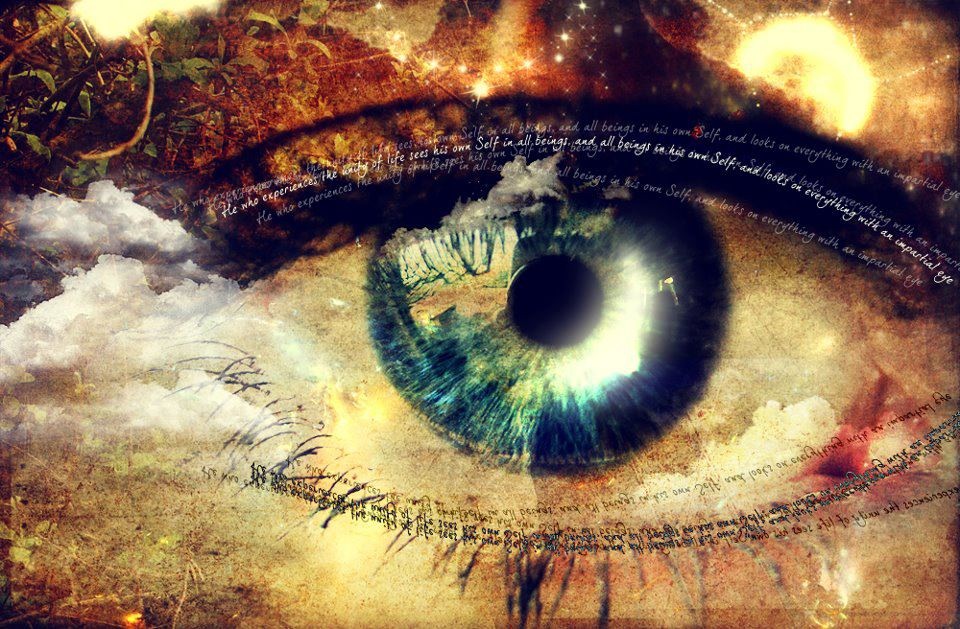
eye of immortality


This week I decided to try to memorize the following verses of Patanjali’s Yoga Sutras, as follows by May 1:

1.         atta yoganusasanam

2.         yogascittavrttinirodhah

3.        tada drastuh svarupe’vasthananam

4.       vrttisarupyamitaratra

5.       vrttayah pancatayyah klistaklistah

6.       pramana vipayaya vikalpa nidra smrtayab

7.      pratyaksa anumana agamah

8.      viparyayah mithyajnanam atadrupa pratistham

9.      sabdajnana anupati vastusunyab vikalpah

10.     abhava pratyaya alambana vrttih nidra


English translation of the above:

1.  With prayers for the divine blessings, now begins an exposition of the sacred art of yoga.

2.  Yoga is the cessation of movements in the consciousness.

3.   Then, the seer dwells in his own true splendor.

4.   At other times, the seer identifies with the fluctuating consciousness.

5.  The movements of consciousness are fivefold. They may be cognizable or non-cognizable, painful or non-painful.

6.  They are caused by correct knowledge, illusion, delusion, sleep and memory.

7.  Correct knowledge is direct, inferred or proven as factual.

8. Illusionary or erroneous knowledge is based on non-fact or the non-real.

9.  Verbal knowledge devoid of substance is fancy or imagination.

10. Sleep is the non-deliberate absence of thought-waves or knowledge.


In May, I will post a you tube video of these ten verses, chanted, then another ten for May, and so on.



The Yoga Bridge, Week 24, April 11, 2014

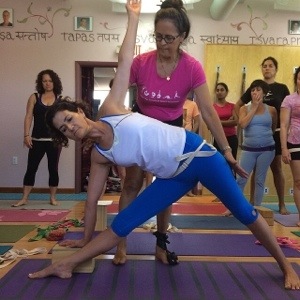
This week, I had a great week at the Yoga studio. I was close to a six-minute head stand. I could get my feet to the floor in Halasana. I stayed for two classes back to back. Improvement. Thanks svadhayaya.

Back to the park, my refugee, I spent time in the fern forest committing to memory the Sanskrit words of Yamas and Niyamas. I wanted the words to be a part of me. A discovery, my understanding of Yamas and Niyamas was very rudimentary. Actually, the words themselves were just tips of ice burgs. For example, I found a swami, Nithyananda, an eccentric genius, on you tube, that gave a detailed explanation of Aparigraha.    Truly, the explanation was mind-blowing.   Below is the  link.

Ashtanga Yoga: Aparigraha   “https://www.youtube.com/watch?v=qPYyupfZgjI”

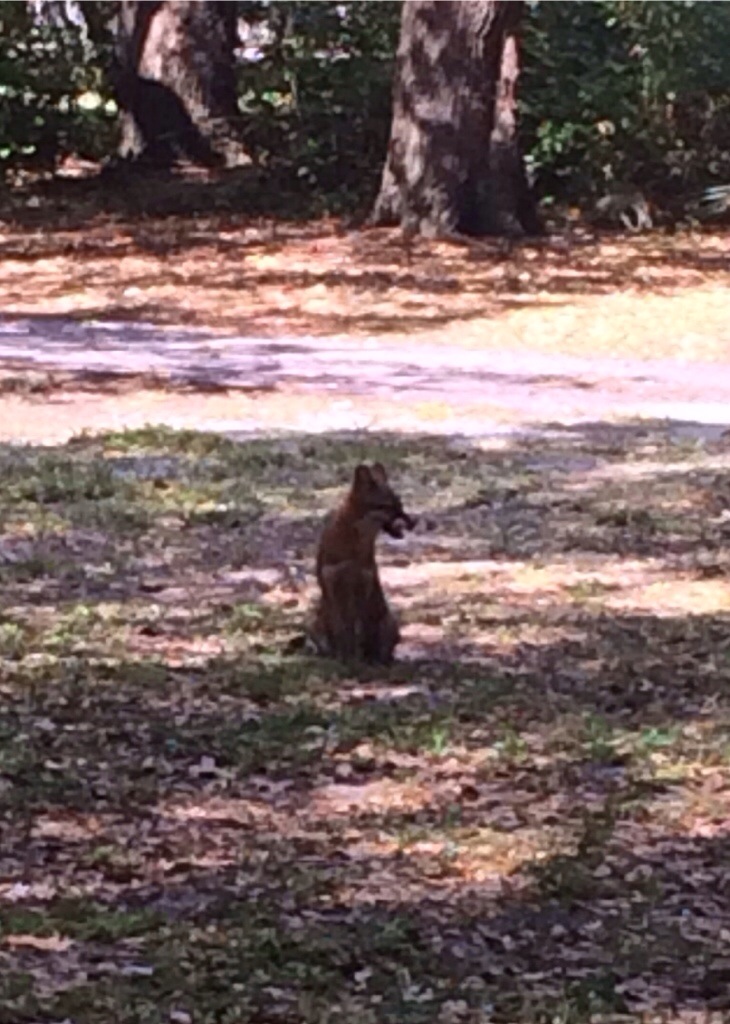
As I was using a Mala to aid in memorizing the sanskrit words by reciting the words out loud, ” Aum, yama, ahimsa, satya, esteya, brahmacharya, aparigraha, Niyama, sauca, santosa, tapas, svadhayaya, isvara pranidhana. Aum.”  108 times. I looked up and there was an animal sitting in front. It must have heard the chanting.  At first, I was worried that the fox would attack.  The red fox was curious, almost playful.  I felt honored to have the visitor.

20140410-181045.jpg

The Yoga Bridge Week 23, April 4, 2014 Common Sanskrit Words

This week, I found some you tube videos in regards to the body, animals, and yoga poses in Sanskrit which I tried to memorize. I was interested in correct pronunciation; as well as, understanding the instructor when asked to do an asana.

Sanskrit, The body

Sanskrit, Common animals

Sanskrit, Asana Pronounciation

.

The Yoga Bride Week 22, March 28, 2014 Citta Vrtti Nirodhah

photo (34)

This picture represents my current state of consciousness. As in the book Light on Life, the water should be still and clear.

Monks that live in secluded monasteries. Yogis in their caves in the Himalayas. There! It is easier to find spirituality. Society is the real battle ground. Dog eat dog. Everyone is suffering in your face or in silence. Everybody encountered suffers and dies. A grotesque reality.

Being a home owner with a family can quickly take a person off the spirtual path due to mounting problems of daily living.

How long have we been on the reincarnation merry go round?

How do I know if I am progressing?

Why did I get off the path and how?

How do I resume the path?

Oh..Pantanjali help us humans.

Previous Older Entries Next Newer Entries