The Yoga Bridge, Week 60, December 28, 2014, Yoga Without Ethical Living And Self Disciplines Is Just Acrobatics.

The actual quote is from the book, Light On Yoga, by B.K.S. Iyengar, in the first paragraph under Yogasanas. Note, some of the words in the title were changed in the following quote.

” The practice of Asanas without the backing of Yama and Niyama is mere acrobatics.”

Most people in America think yoga is only poses and that is false. A valid question, how could living ethically and self disciplines affect yoga practice? Yoga is a process of true self realization. This process could take decades with constant right yogic practice. In the short term, I believe when a student of yoga follows ethical living and the self disciplines, the negativity of the mind and body start to exit. The mind and body will become purified and clearer. For example, If a person who ate and drank only junk food all their lives and then started eating healthy food, their body and mind would start to purify and become health. This lifestyle would improve their bodies ability; hence, yoga practice. Right thinking, right living, right disciplines brings healthy energy which causes self transformation over time.

So ethical living is 1) non violence. 2) truthfulness 3) non stealing 4) non hording
5) committed relationship or celibacy. When one examines each one, it will be discovered, for example, non violence, means more than refraining from physically harming. There are internal thoughts which could be harmful, or the purchase of an item where an animal was mistreated or forced labor.

There are five disciplines, 1) non attachment 2) cleanliness 3) dedicated training 4) study of religious text 5) surrendering to God. Start with the religion you were born into.
The Yoga Bridge, Week 28, May 9, 2014, Gomukhasana

20140510-154238.jpg

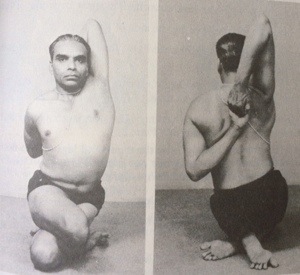
Gomukhasana, The cow pose. As per the photo. Step by step instruction can be found in ” Light On Yoga”, B.K.S. Iyengar, pages 114-116.

” Go means a cow. Mukha means face. Gomukha means one whose face resembles a cow. It also means a kind of a musical instrument, narrow at one end and broad at the other like the face of a cow.

Technique

1. Sit on the floor with the legs stretched straight in front. (Plate 77)

2. Place the palms on the floor and raise the seat.

3. Bend the left knee back and sit on the left foot  from the floor, raise the right leg and place the right thigh over the left one. Raise the buttocks and with the help of the hands bring the ankles and the back of the heels together till they touch each other.

4. Rest the ankles, keeping the toes pointing back.

5. Raise the left arm over the head, bend it at the elbow and place the left palm below the nape of the neck between the shoulders. Lower the right until the right hand is level with and between the shoulder-blades. Clasp the hands behind the back between the shoulders. (Front view: Plate 80. Back view: Plate 81) ”

** This information is for educational purposes only.  Doing yoga without proper instruction from a certified Iyengar teacher could be hazardous to oneself.  If seeking an instructor please see link.  https://secure.iynaus.org/search

When a cow sits down, they fold their legs. If one uses their imagination, the pose has some resemblance. Lately, the yoga studio has been doing this pose in every class.  Every time I did gomukhasana, I immediately felt a lot of pain in the deltoids and in both shoulder blades. A burning pain like a knife plunged into the shoulder-blades. Progress has been slow. After a year and half, not much progress. At present time,  no chance of grasping the fingers.  We use a strap to bridge the gap but its not very satisfying.   I wish I knew what was going on with the shoulders. Scar tissue in the shoulder joints? dislocation? Improper technique? An instructor, whom is a physical therapist,  told me I had lordosis and kyphosis. Is this related to the inability to clasp hands?

My home practices is sporadic. I had done yoga everyday but not a series nor at dawn. Time to get back on the saddle. Creating a home yoga practice will take time, multiple attempts, and perseverance because its a new habit.

Sutras study. I watched a few YouTube videos of people reciting Patanjali’s Samadhi Pada. Ok. It was a bit odd. I doubt that I will do the butchery of Sanskrit pronunciation on YouTube , which could make Patanjali cringe, unless there is a great out pour of blogger support. Learning the Samadhi Pada, unless a break through, will take six months.


The Yoga Bridge, Week 25, April 18, 2014 So, The Quest Begins


eye of immortality


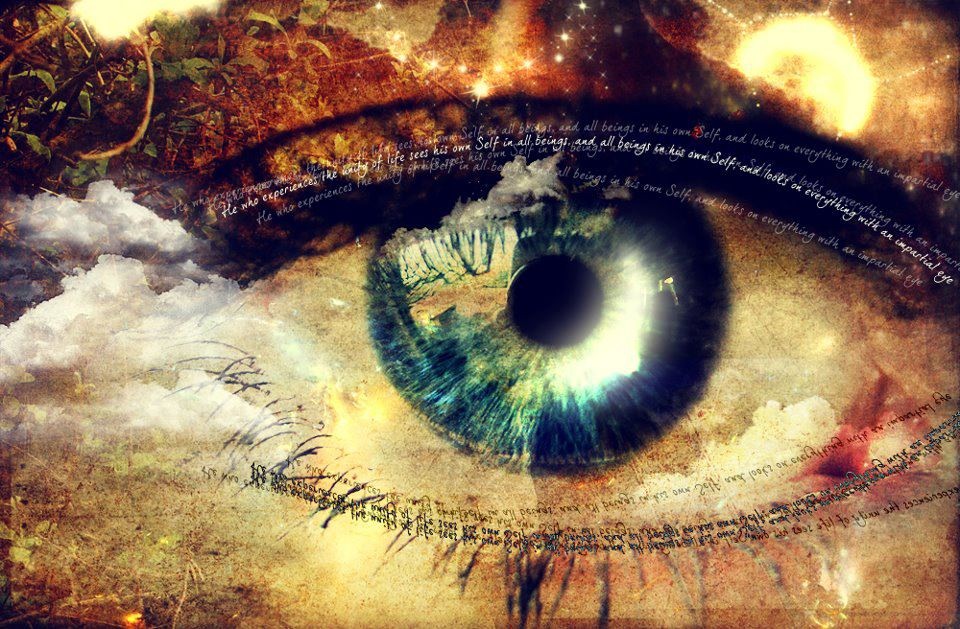
This week I decided to try to memorize the following verses of Patanjali’s Yoga Sutras, as follows by May 1:

1.         atta yoganusasanam

2.         yogascittavrttinirodhah

3.        tada drastuh svarupe’vasthananam

4.       vrttisarupyamitaratra

5.       vrttayah pancatayyah klistaklistah

6.       pramana vipayaya vikalpa nidra smrtayab

7.      pratyaksa anumana agamah

8.      viparyayah mithyajnanam atadrupa pratistham

9.      sabdajnana anupati vastusunyab vikalpah

10.     abhava pratyaya alambana vrttih nidra


English translation of the above:

1.  With prayers for the divine blessings, now begins an exposition of the sacred art of yoga.

2.  Yoga is the cessation of movements in the consciousness.

3.   Then, the seer dwells in his own true splendor.

4.   At other times, the seer identifies with the fluctuating consciousness.

5.  The movements of consciousness are fivefold. They may be cognizable or non-cognizable, painful or non-painful.

6.  They are caused by correct knowledge, illusion, delusion, sleep and memory.

7.  Correct knowledge is direct, inferred or proven as factual.

8. Illusionary or erroneous knowledge is based on non-fact or the non-real.

9.  Verbal knowledge devoid of substance is fancy or imagination.

10. Sleep is the non-deliberate absence of thought-waves or knowledge.


In May, I will post a you tube video of these ten verses, chanted, then another ten for May, and so on.


The Yoga Bride Week 22, March 28, 2014 Citta Vrtti Nirodhah

photo (34)

This picture represents my current state of consciousness. As in the book Light on Life, the water should be still and clear.

Monks that live in secluded monasteries. Yogis in their caves in the Himalayas. There! It is easier to find spirituality. Society is the real battle ground. Dog eat dog. Everyone is suffering in your face or in silence. Everybody encountered suffers and dies. A grotesque reality.

Being a home owner with a family can quickly take a person off the spirtual path due to mounting problems of daily living.

How long have we been on the reincarnation merry go round?

How do I know if I am progressing?

Why did I get off the path and how?

How do I resume the path?

Oh..Pantanjali help us humans.

The Yoga Bridge, Week 21, March 21, 2014

photo (33)

For Yoga to work, practice must be done at home.  I woke up three times this week before dawn to do Asanas.   The picture was from my yoga mat and that light was the planet Saturn. The other days, I would have class or would do yoga in the evening.  Yoga needs to become a habit and not a passing fad.

The Yoga Bridge, Week 20, March 14, 2014 The Journey for Individuality


This week, I did some time thinking and studying in a forest.  Meditation. Reading, Asanas, Loving Kindness.  Mantras.    Yoga has started me down a spiritual path  to find the true self.  I started reading Iyengar’s book on Patanjali’s sutras as in the picture.

Other things that I learned from reading and want to add to the yoga practice.

1) Every time I say the word, Aum, I will say it with passion and tremendous respect.

2) Every time I say the word, Aum, I will  try to surrender completely to God.

3) Asana, move slowly to keep a steady base. Never in a hurry.

4) Use my skin. The skin is what tells me where I’m in space. Give it attention.

5) Prana means energy, not breath. The cosmos breaths me.

As per the suggestion of a Swami on YouTube, I declared my self enlightened. It was like giving notice to my mind.  The declaration was done with tremendous passion and sincerity.  This was the advise of a swami, in regards to enlightenment. I do  follow the yamas and niyamas.

English Translation of Invocation to Patanjali

Invocation To Patanjali

Yogena cittasya padena vacam

malam sarirasya ca vaidyakena

yopakarottam pravaram munina

patanjalim pranjaliranato smi

abahu purussakaram

sankha cakrasi dharinam

sahasra sirasam svetam

pranamami patanjalim

Commentary and Translation
of the Invocation to Patanjali
by Smt. Geeta S. Iyengar

The two slokas (verses) that we chant to invoke Lord Patanjali begin the Bhojavritti, Bhoj’s commentary on the Yoga Sutras. It
says, first of all, that Lord Patanjali is considered to be the incarnation of Adhishesha, the cobra, which is the seat for the Lord
Vishnu, the very creator of this world. It is said he took birth three di!erent times, giving three di!erent sciences for people to
improve themselves. The first is yoga.

yogena cittasya padena vacam
To purify the mind (citta), purify the consciousness, Patanjali gave the science of yoga (yogena) to us. To purify our
use of words (pada) and speech (vacca), he gave a commentary on grammar to us, so that our use of words and way
of speaking is clarified, distinct and pure.

malam sarirasya ca vaidyakena
To remove the impurities (malam) of the body (sarira), he gave us the science of medicine (vaidyakena).

yopakarottam pravaram muninam
Let me go near the one who has given these things to us.

patanjalim pranjalir anato’smi
Let me bow down my head with my folded hands to Lord Patanjali. Then after knowing the work of this Lord, the second stanza
says what Lord Patanjali looks like. To do any meditation first the form has to be in front of the eyes.

abahu purusakaram
From the hand up to the head he has the shape (karam) of a human (purusa).

sankha carkrasi dharinam
In his hand he is holding the conch (sankha) and disc (cakra)

sahasra sirasam svetam
On top of his head (sirasam) he has got a thousand (sahasra) hoods of the cobra, because he is the incarnation of Adishesha,
the greatest cobra. Svetam means white.

pranamami patanjalim
I bow down to Patanjali.

We chant so that at the very beginning that feeling of sanctification comes from inside, with the feeling of surrendering oneself,
because nothing can be learned in this world unless you have the humility to learn. So the moment you think of the Lord at the
beginning of doing a practice, you know that you are very small in front of that greatest soul. Once that is understood then the
other problems which always arise while practicing, mainly concerned with the ego, will be a!ected. You know that you are
“coming down” to learn something. And you can’ t learn anything unless you come down; if you think you are on the top and you
know everything, then you are not a learner at all. In that sense, the chanting helps.

The Yoga Bride, Week 17, February 21, 2013 The Joy of Yoga Is The Challenge

On Wednesday, I went to an entry level yoga class. I was learning yoga but also was observing how the teacher instructed. There were three women, one in her late 70s, a middle aged women with scoliosis, her first yoga class, another middle aged women, and myself. At first, the class was sluggish until the last fifteen minutes. The instructor spoke firmly, but with kindness, and was protective of the students safety in each pose. We did ardha Chandrasana against a wall. It seemed to me an advanced pose. We did baddha konasana while sitting. Great pose.

Towards the end of class, we did a challenging pose, setu bandha sarvangasana but with our feet on the edge of a chair while grabbing the chair’s front legs. The woman with scoliosis praised the pose and said she felt better. She was new to yoga and I could tell she was hooked because she was asking when was the next class. I heard the 70 year old woman say she felt better. She was doing a the pose in a different way because of her age and ability. This class was the highlight of her week. The other woman seemed to appreciate the pose. Setu bandha sarvangasana was a pose that I value. The class end on a high note with everyone excited for the next class. As always, we finished the class with corpse pose, savasana.

The joy is experiencing improvement no matter how little or great it is. That is the joy of yoga for myself. Breaking through a plateau. Tiny improvements and not falling back.

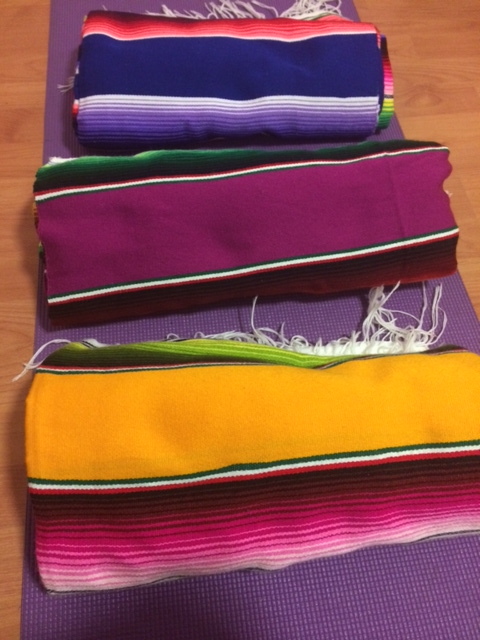
The Yoga Bridge Week 15, Authentic Mexican Serapes

I bought some yoga blankets this week. I decided that I wanted to have quality yoga props. My home yoga practice is an investment in myself. I ordered authentic Mexican blankets called Serape. The art of serape making goes back many centuries. The web page proclaimed that these blankets were manufactured by descendants of Mayan Indians of the Yucatan Peninsula of Mexico. I hope that was true and that everyone can profit.

photo (23)

Here is my impression. These blankets are works of art, brilliant colors, and expertly woven. The cotton is soft. It is true that these serapes brighten the room and spirit. These serapes are different from the yoga blankets we use at the studio less soft and require different folding techniques.

http://www.stylemexican.com/mexican-blankets-sarapes.html

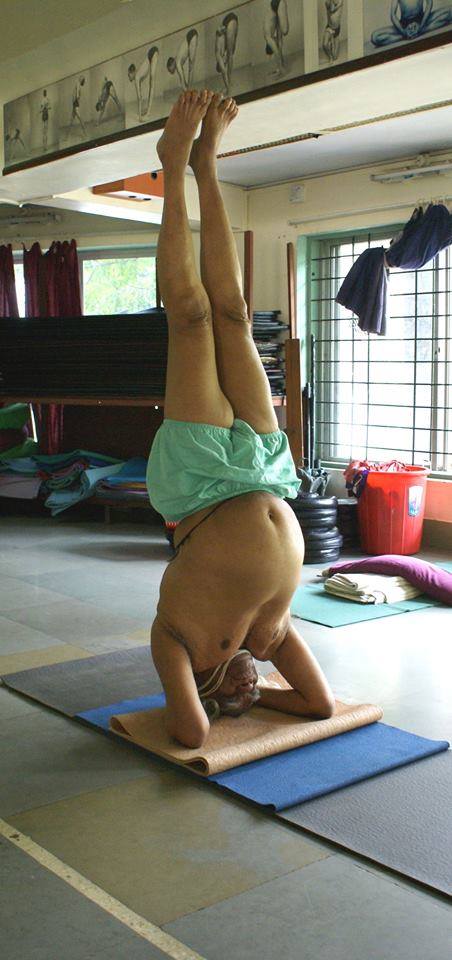
B.K.S. Iyengar doing head stand pose on Jan 26, 2014 Morning

b.k.s. iyengar on 1 26 14

Here is a picture of B.K.S. Iyengar doing head stand pose on January 26, 2014, morning. He is 95 years old. I obtained this information from Facebook.

Previous Older Entries