The Yoga Bridge, Week 45, Sept 6, 2014, First Time Official Pranayama

Almost two years of regular practice, at my home, I took my first class of pranayama with an advanced Iyengar certified yoga instructor. A lot of people had thought Prana to be about the management of breath, but if you look at breath, what was breath? It was Energy. So, Pranayama was the management of energy.

The yoga instructor said there was a large part of our lungs that we don’t utilize. We wanted to utilize this area with deep belly breathing. So, We did an inclined pranayama. The legs were on the floor while the chest was supported by A bolster and a folded yoga blanket to support the back of the neck on top of the bolster.

We did a slow inhale. Then stopped. I inhaled more. I did it two more times. My stomach blew up like a balloon. We then did a slow raspy exhale. After five cycles, I was in a dream state, not a sleep not awake.

The yoga instructor then read something that Guruji had written about the feeling of negativity while doing pranayama. What She was reading was exactly what I had experienced. The goal was to see the negativity and use yoga to make it positive.

The Yoga Bridge Week 44, August 29, 2014. The Death Of Our Leader

When I heard that B.K.S. Iyengar died, sadness, worry, then I immediately thought of a text that I had read called the Buddha’s Farewell, the last lecture of the Buddha.

Even though Iyengar has passed on, he left us plenty of tools to continue on with yoga. I saw parallels. Note in the lecture, Ananda was Buddha’s head disciple. Monks were called bhikkhus. The text read as follows:

THE BUDDHA’S FAREWELL

WHEN the Blessed One had remained as long as he wished at Ambapali’s grove, he went to Beluva, near Vesali. There the Blessed One addressed the brethren, and said: “O mendicants, take up your abode for the rainy season round about Vesali, each one according to the place where his friends and near companions may live. I shall enter upon the rainy season here at Beluva.”

When the Blessed One had thus entered upon the rainy season there fell upon him a dire sickness and sharp pains came upon him even unto death. But the Blessed One, mindful and self-possessed, bore his ailments without complaint. Then this thought occurred to the Blessed. It would not be right for me to pass away from life without addressing the disciples, without taking leave of the order. Let me now, by a strong effort of the will, subdue this sickness, and keep my hold on life till the allotted time have come.” And the Blessed One by a strong effort of the will subdued the sickness, and kept his hold on life till the time he fixed upon should come. And the sickness abated.

Thus the Blessed One began to recover; and when he had quite got rid of the sickness, he went out from the monastery, and sat down on a seat spread out in the open air. And the venerable Ananda, accompanied by many other disciples, approached where the Blessed One was, saluted him, and taking a seat respectfully on one side, said: “‘I have beheld, Lord, how the Blessed One was in health, and I have beheld how the Blessed One had to suffer. And though at the sight of the sickness of the Blessed One my body became weak as a creeper, and the horizon became dim to me, and my faculties were no longer clear, yet notwithstanding I took some little comfort from the thought that the Blessed One would not pass away from existence until at least he had left instructions as touching the order.”

The Blessed One addressed Ananda in behalf of the order, saying: “What, then, Ananda, does the order expect of me? I have preached the truth without making any distinction between doctrine hidden or revealed; for in respect of the truth, Ananda, the Tathagata has no such thing as the closed fist of a teacher, who keeps some things back.

“Surely, Ananda, should there be any one who harbor the thought, “It is I who will lead the brotherhood,’ or, ‘The order is dependent upon me,’ he should lay down instructions in any matter concerning the order. Now the Tathagata, Ananda, thinks not that it is he who should lead the brotherhood, or that the order is dependent upon him. Why, then, should the Tathagata leave instructions in any matter concerning the order?

“I am now grown old, O Ananda, and full of years; my journey is drawing to its close, I have reached the sum of my days, I am turning eighty years of age. Just as a wornout cart can not be made to move along without much difficulty, so the body of the Tathagata can only be kept going with much additional care. It is only when the Tathagata, Ananda, ceasing to attend to any outward thing, becomes plunged in that devout meditation of heart which is concerned with no bodily object, it is only then that the body of the Tathagata is at ease.

“Therefore, O Ananda, be ye lamps unto yourselves. Rely on yourselves, and do not rely on external help. Hold fast to the truth as a lamp. Seek salvation alone in the truth. Look not for assistance to any one besides yourselves.

“And how, Ananda, can a brother be a lamp unto himself, rely on himself only and not on any external help, holding fast to the truth as his lamp and seeking salvation in the truth alone, looking not for assistance to any one besides himself? Herein, O Ananda, let a brother, as he dwells in the body, so regard the body that he, being strenuous, thoughtful, and mindful, may, whilst in the world, overcome the grief which arises from the body’s cravings. While subject to sensations let him continue so to regard the sensations that he, being strenuous, thoughtful, and mindful, may, whilst in the world, overcome the grief which arises from the sensations. And so, also, when he thinks or reasons, or feels, let him so regard his thoughts that being strenuous, thoughtful and mindful he may, whilst in the world, overcome the grief which arises from the craving due to ideas, or to reasoning, or to feeling.

“Those who, either now or after I am dead, shall be lamps unto themselves, relying upon themselves only and not relying upon any external help, but holding fast to the truth as their lamp, and seeking their salvation in the truth alone, and shall not look for assistance to any one besides themselves, it is they, Ananda, among my bhikkhus, who shall reach the very topmost height! But they must be anxious to learn.”
IMG_3797.JPG

The Yoga Bridge, Week 42, August 15, 2014, Simple Plan To Practice Detachment

” Hey, what are you doing???” I held out a yoga prop for someone behind me. ” Stop handing out props. Yoga is about you. Don’t worry about the person. That is my job! “, sternly spoke the yoga instructor.

Everyone could easily get their own props. The yoga instructor wanted to make a point. Yoga was one of the few things you could be selfish about under the right conditions.

If the hour was free from current responsibility, why waste time thinking about them? If possible, try to make time where you would be free.

Once you have the free time, walking through the yoga studio door could be like a magic portal. Before going in, try to clear the mind by being mindful.  Leave the problems outside. This is a way to detach for a little while.

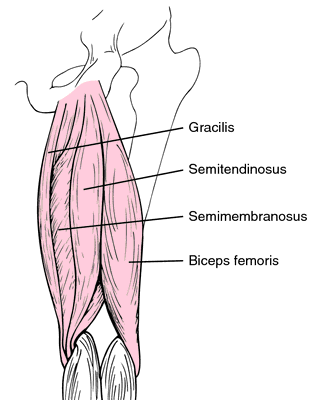
The Yoga Bridge, Week 41, August 8, 2014. Tight semimembranosus, semitendinosus, and biceps femoris?

A lot of people, myself include, talk about the hamstrings without a clue as to how they function.  Medical text books show the hamstring muscles on paper but which muscles contract and which extends.  How do I know if I have weak hamstring muscles?  Where does the pain come from? 

What is the hamstrings anyways?   I used the term hamstrings a lot without much understanding.   ” That area in the back of the legs is commonly known as the “hamstring.”  The primary muscles of the “hamstring” group are semimembranosus, semitendinosus, and biceps femoris, located behind the leg, between the buttocks and the knee. Though each muscle can work independently, together they help bend the knee and bring the leg backwards. (And remember, our muscles work synergistically, never individually.)  One muscle of the hamstring group also connects to a ligament that provides stability to the sacroiliac joint, the meeting point of the base of the spine and the pelvic bone.  That same joint affects numerous important primary mover muscles in our backs. (Tight Hamstrings: Causes, Treatment, and Prevention by Andrew Duffy, NASM-CPT, PES July 27 2009)   The tightness may be caused by 1) muscle weakness, 2) Pelvic tilt.  When you have these two conditions, this may result in back pain because the back incorrectly compensates for the conditions.  

So what can Anyone do to gain more flexibility and eliminate pain?  F.Y.I, I still don’t have a clear picture of how the muscles work together.   Anyways, I did a you tube search and found a video that I liked.  

” 3 poses To Improve Hamstring Flexibility,” by Erkhartyoga.com

http://www.youtube.com/watch?v=aVsCcH_U_kc

 1) Laying down, one leg at 90 degrees,   the other straight with toes pointing up. You will need a rope. Lift leg to 90 degrees, or as close as possible, and the other leg straight, tadasana leg, 1 min both legs. ••• However, I recommend letting go of the belt after 15 seconds letting and maintain the posture for 45 seconds. I believe this will strengthen the muscles. This was something I discovered and was not part of the video.

2) Forward bend.   Uttanasana,

3) Half splits.  Arda hamasana.

As always, I am not a doctor nor a certified Iyengar yoga instructor, at least not yet.  You should seek consul and instruction from the proper source.

This blog is for information only.

IMG_3838.PNG

The Yoga Bridge, Week 40, July 31, 2014 Cheerfulness

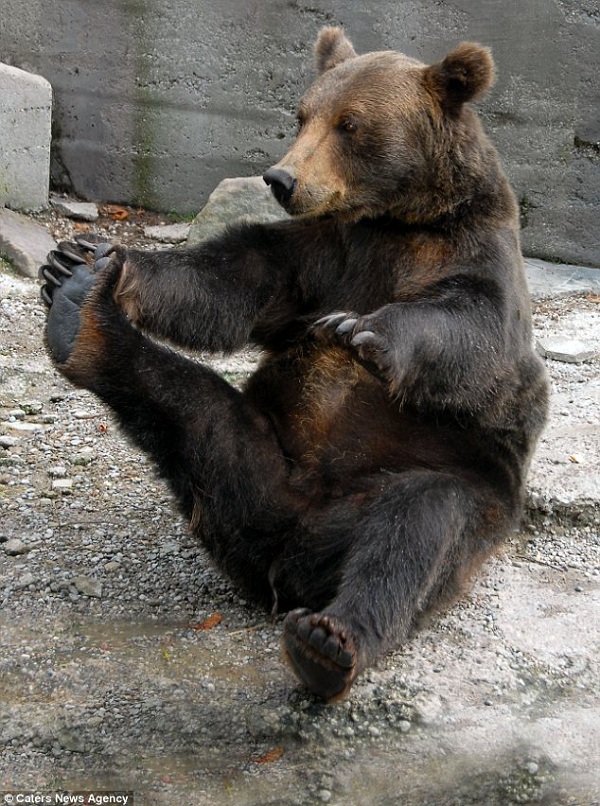
yoga-bear” The first sign that you are becoming religious is when you start behaving cheerful. To the yogi everything is bliss. Every face they see brings cheerfulness to them. That is the sign of a virtuous person.

Misery is caused by sin and by no other cause. What business do you have of a clouded face? It is terrible. If you have a clouded face, do not go out that day. Shut your self in your room.

What right do you have to carry this disease out into the world? When your mind has control, it has control over the whole body; instead of being a slave to the machine, the machine becomes your slave. Instead of this machine being able to drag you down, the machine becomes the greatest helpmate.”

Swami Vivekananda

The Yoga Bridge, Week 39, July 25, 2014.

20140726-081523-29723156.jpg

The Yoga Bridge, Week 37, July 12, 2014 Self Appointed Yank Yoga Advocate

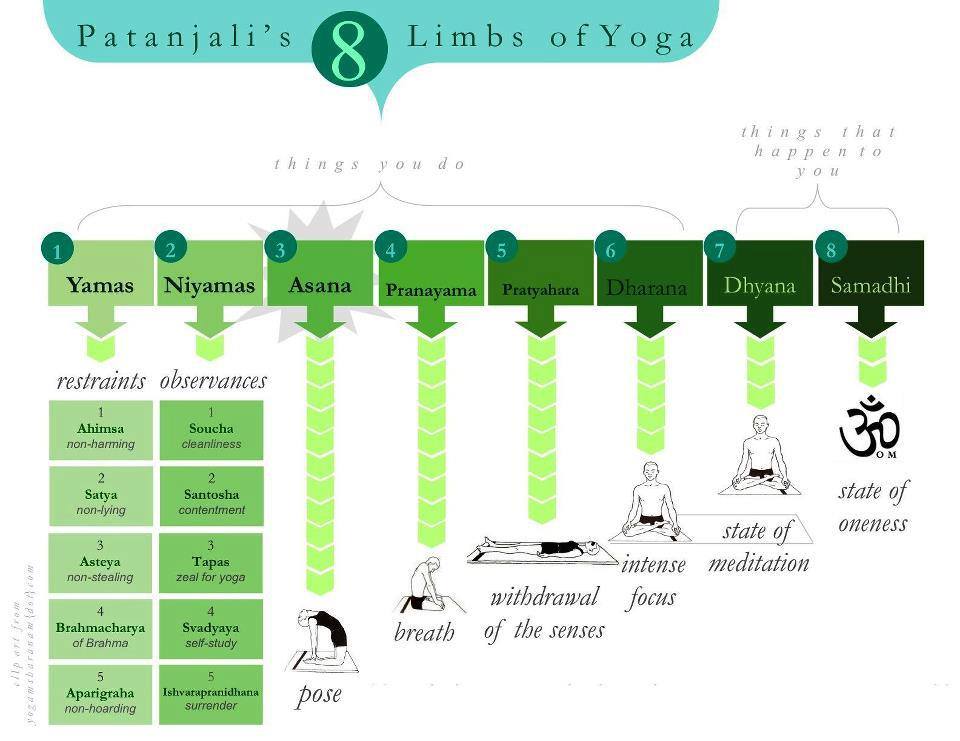
Unfortunately, nobody has asked me, ” What is Iyengar yoga about?”  My explanation to the imaginary person would be something like this. ” For me, it’s a lifestyle.” I would try to explain yoga in very plain English in practical terms. I would translate the Sanskrit words to the simplest English words to show the practicality. A general overview, there are eight steps or limbs; as follows:

1) ethical behavior

2) mental development

3) postures

4) breathing (energy) management

5) discipline of our senses

6) concentration

7) meditation

8) living in the present without thought.

” Give Iyengar yoga a chance, try it for six months and have the resolve to not quit.  For right now, step one, ethical behavior, start cleaning your mind. Think about living this way:

1) living a non violent life

2) truthfulness to the self and others

3) non stealing

4) having little possessions

5) sexual control.

Also, I encourage vegetarianism. I’m not a vegetarian but a work in progress. I believe meat to be unethical and unhealthy. I have a lot of love for animals, friendship, it’s not right to harm them nor eat them.”. 

eight limbs bulletin

The Yoga Bridge Week 36, July 4, 2014. Chakaras? Nirvana?

So, are the chakaras a detailed description of the soul?

Is Patanjali’s sutras a detailed explanation of how to enter into Nirvana?

The Yoga Bridge Week 35, June 27, 2014.

Yoga is much more than asanas? Yoga isn’t just something you do. It is a way of living.

As of right now, all I have is the home practice of yoga. I attended only one yoga class in the last 30 days and I paid for unlimited classes. Once again, I’m back in New York near Sleepy Hollow which is far from downtown. I live near Miami, Florida. I can’t very easily break away and do a yoga class either. Yoga has helped in coping with reality. I’m less calm without the routine. Despite no classroom yoga, I’m glad to help others.

In the morning, I do Adho Mokha Savasana, downward dog, Salamba Sirsasana, head stand, forward bend, Supta band ha, bridge pose, and bandha Konasana, while doing 10 breaths, 15 second in, 15 second hold, and 17 exhale. Sometime I will listen to the samadhi Pada, iPhone app, while reciting what I know or listen to Chapter 15 yoga from the Bhagavad Gita, YouTube video. Once I learn the Gayatri mantra, I will recite the mantra daily.

The Yoga Bridge, Week 34, June 21, 2014

20140624-085342-32022790.jpg

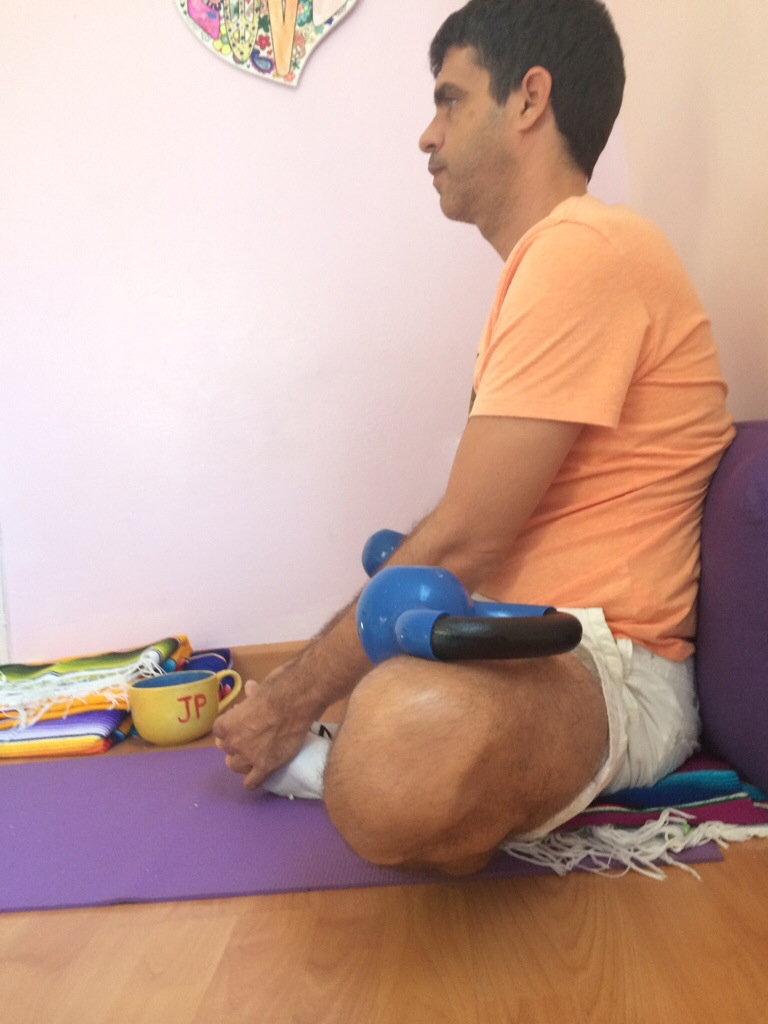
Empty the brain. Do this before going to bed. Every night , I sit in Baddha Konasana and I use kettle bells to help push the knees down. At the same time, I do a ten breath exercise, 15 second inhale, 15 second hold, and a 20 second exhale.

Sometime I will do a mantra with a Mala. A Mala is a neck less with 108 beads. The Mala I have is made of wood from a boddhi tree and was blessed. I believe the mala was an inspiration for the Christian Rosary, just like prayer hands, Amen, the trinity, and the rosary may have it’s origin in Indian culture. A mantra could be anything or something from antiquity. The words are said 108 times with the word Om said afterwards.

A sacred mantra is the Gayati Mantra which was in a recent posting on Facebook, sanskriti. Here is the link. http://www.sanskritimagazine.com/indian-religions/hinduism/gayatri-mantra/ust I believe one should be trying to follow the Yamas and Niyamas before reciting this mantra. I would repent any sins before doing this. Below is a YouTube link to the Gayatri Mantra:

Previous Older Entries Next Newer Entries