When I first started writing about yoga, I was concerned that I couldn’t do a pose perfectly. I still couldn’t do a perfect pose but that was okay. Even without perfection, everytime I did a pose, it was new, the same pose, but always fresh. While doing the poses in class, I didn’t notice the passing of time. In fact, most of the yoga classes passed without awareness of time. I wondered if I was in a low level of Samadhi. I was there, my mind was present, and the object, the yoga pose. I wasn’t think of anything.
The Yoga Bridge, May 15, 2015 Samadhi or wishful thinking?
16 May 2015 Leave a comment
in Uncategorized Tags: Iyengar Yoga, samadhi pada, yogarosa
The Yoga Bridge, Week 55, November 27, 2014, Good News!
24 Nov 2014 1 Comment
in YOGA Tags: Iyengar Yoga, Iyengar Yoga Student, Patanjali Yoga, yogarosa
Good news! A relative gifted another year of unlimited yoga. This will be the third year of yoga. I will continue writing the blog for another year or longer. After the third year, I will probably start studying for teacher certification.
Right now, Yoga is the counter weight to my other activities.
And of course some weirdness, I have read that a re-occurring pain or a body scar may be from a past life as per the scar on the center of my forehead. Tilak?

The Yoga Bridge Week 35, June 27, 2014.
29 Jun 2014 Leave a comment
in YOGA Tags: Iyengar Yoga, yogarosa
Yoga is much more than asanas? Yoga isn’t just something you do. It is a way of living.
As of right now, all I have is the home practice of yoga. I attended only one yoga class in the last 30 days and I paid for unlimited classes. Once again, I’m back in New York near Sleepy Hollow which is far from downtown. I live near Miami, Florida. I can’t very easily break away and do a yoga class either. Yoga has helped in coping with reality. I’m less calm without the routine. Despite no classroom yoga, I’m glad to help others.
In the morning, I do Adho Mokha Savasana, downward dog, Salamba Sirsasana, head stand, forward bend, Supta band ha, bridge pose, and bandha Konasana, while doing 10 breaths, 15 second in, 15 second hold, and 17 exhale. Sometime I will listen to the samadhi Pada, iPhone app, while reciting what I know or listen to Chapter 15 yoga from the Bhagavad Gita, YouTube video. Once I learn the Gayatri mantra, I will recite the mantra daily.
The Yoga Bridge, Week 34, June 21, 2014
24 Jun 2014 Leave a comment
in Uncategorized Tags: beginner, Iyengar Yoga, yogarosa
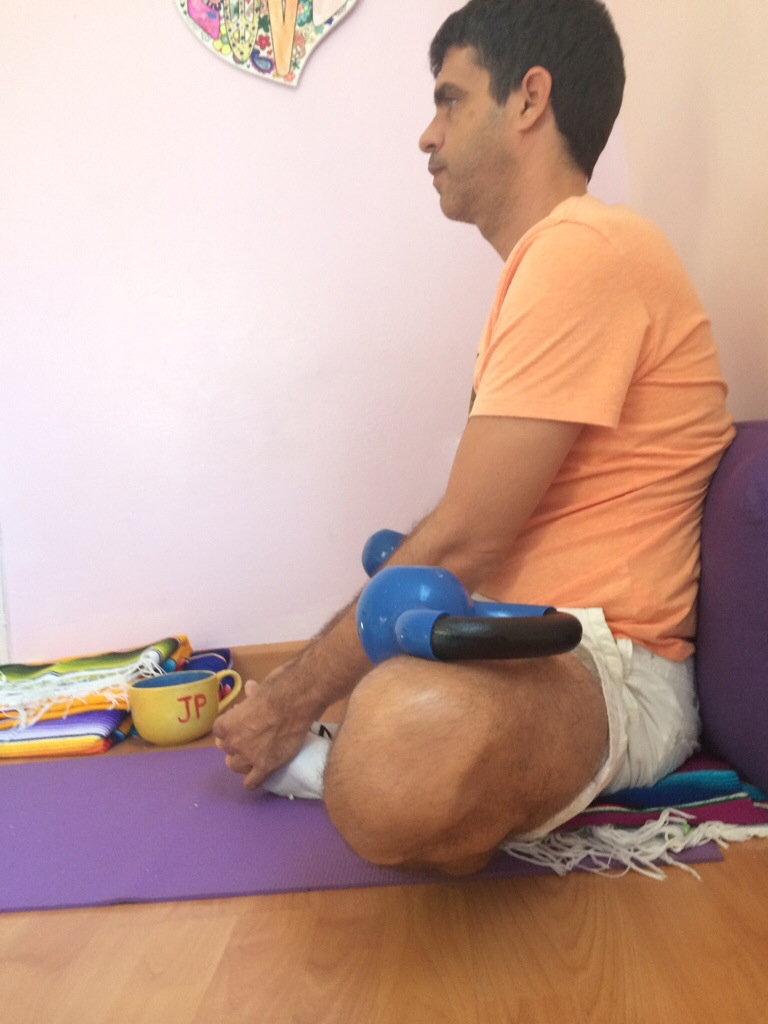
Empty the brain. Do this before going to bed. Every night , I sit in Baddha Konasana and I use kettle bells to help push the knees down. At the same time, I do a ten breath exercise, 15 second inhale, 15 second hold, and a 20 second exhale.
Sometime I will do a mantra with a Mala. A Mala is a neck less with 108 beads. The Mala I have is made of wood from a boddhi tree and was blessed. I believe the mala was an inspiration for the Christian Rosary, just like prayer hands, Amen, the trinity, and the rosary may have it’s origin in Indian culture. A mantra could be anything or something from antiquity. The words are said 108 times with the word Om said afterwards.
A sacred mantra is the Gayati Mantra which was in a recent posting on Facebook, sanskriti. Here is the link. http://www.sanskritimagazine.com/indian-religions/hinduism/gayatri-mantra/ust I believe one should be trying to follow the Yamas and Niyamas before reciting this mantra. I would repent any sins before doing this. Below is a YouTube link to the Gayatri Mantra:
The Yoga Bridge Week 32, June 6, 2014 Malasana, Heaven for the Back
04 Jun 2014 Leave a comment
in YOGA Tags: back pain, Iyengar Yoga, malasana, what is a yogi?, yogarosa
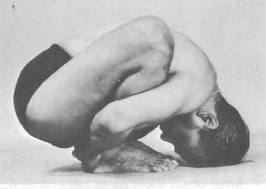
This week and last week, we learned the pose Malasana. Mala means a garland or neckless. A garland is a decorative wreath or cord, used at festive occasions, which can be hung round a person’s neck, or on inanimate objects like Christmas trees. Originally garlands were made of flowers or leaves. The detailed instructions are on page 262 of Light on Yoga. In this pose, the arms hang from the neck like a garland, hence the name. (light on yoga.pg 267)
Technique
1. Squat on the haunches with the feet together. The soles and the heels should rest completely on the floor. Raise the seat from the floor and balance.(Plate 317)
2. Now widen the knees and move the trunk forward.
3. Exhale, wrap the arms rond the bent legs and rest the palms on the floor.( Plate 318)
4. Take the hands one by one behind the back and clasp ( Yeah right!) the fingers. (Plate 319 and 320)
5. Then stretch the back and neck up.
6. Remain in this position for 30 to 60 seconds breathing normally.
7. Now exhale, bend forward and rest the head on the floor. (Plate 321) Stay in this position also for 30 to 60 seconds with normal breathing.
8. Inhale, raise the head from the floor and return to position 5.
9. Release the hands and rest on the floor.
Effects
The asana tones the abdominal organs and relieves backaches.
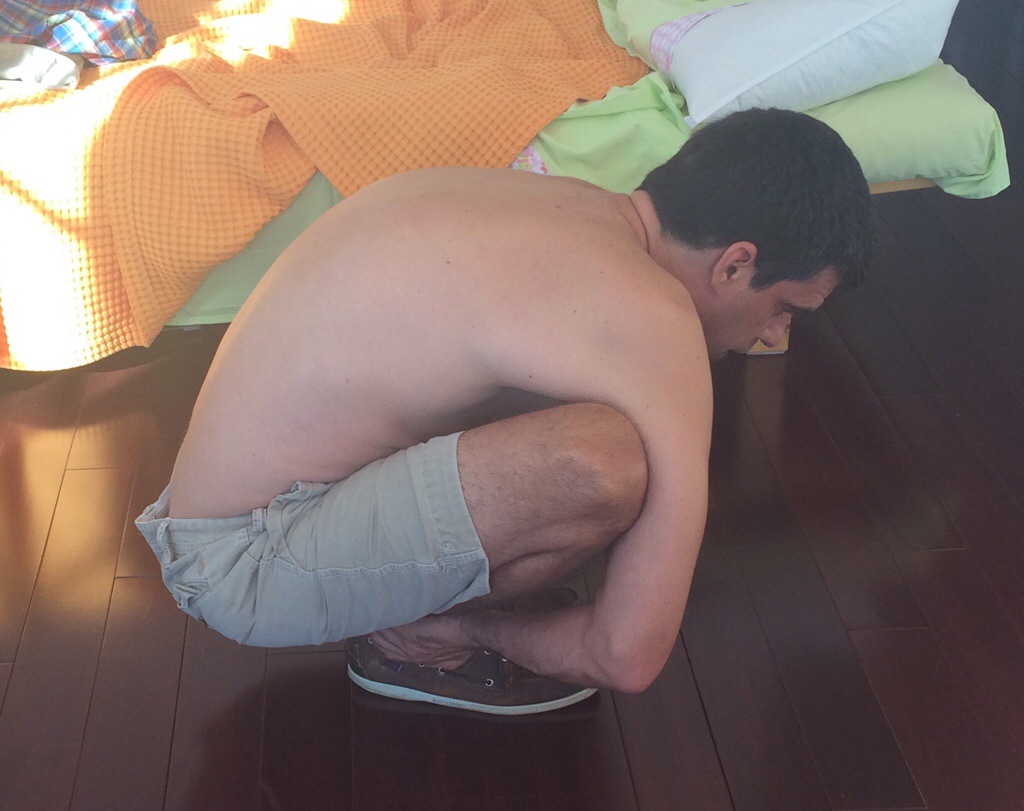
So, here’s my pathetic malasana. Please no laughing. Note, I was having trouble getting the ankles to the floor but I was able with shoes on.
The Yoga Bridge, Week 28, May 9, 2014, Gomukhasana
09 May 2014 2 Comments
in YOGA Tags: B.K.S. Iyengar, gomukhasana, Iyengar Yoga, Light On Yoga, yogarosa
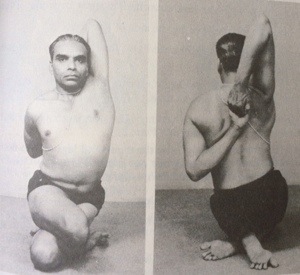
Gomukhasana, The cow pose. As per the photo. Step by step instruction can be found in ” Light On Yoga”, B.K.S. Iyengar, pages 114-116.
” Go means a cow. Mukha means face. Gomukha means one whose face resembles a cow. It also means a kind of a musical instrument, narrow at one end and broad at the other like the face of a cow.
Technique
1. Sit on the floor with the legs stretched straight in front. (Plate 77)
2. Place the palms on the floor and raise the seat.
3. Bend the left knee back and sit on the left foot from the floor, raise the right leg and place the right thigh over the left one. Raise the buttocks and with the help of the hands bring the ankles and the back of the heels together till they touch each other.
4. Rest the ankles, keeping the toes pointing back.
5. Raise the left arm over the head, bend it at the elbow and place the left palm below the nape of the neck between the shoulders. Lower the right until the right hand is level with and between the shoulder-blades. Clasp the hands behind the back between the shoulders. (Front view: Plate 80. Back view: Plate 81) ”
** This information is for educational purposes only. Doing yoga without proper instruction from a certified Iyengar teacher could be hazardous to oneself. If seeking an instructor please see link. https://secure.iynaus.org/search
When a cow sits down, they fold their legs. If one uses their imagination, the pose has some resemblance. Lately, the yoga studio has been doing this pose in every class. Every time I did gomukhasana, I immediately felt a lot of pain in the deltoids and in both shoulder blades. A burning pain like a knife plunged into the shoulder-blades. Progress has been slow. After a year and half, not much progress. At present time, no chance of grasping the fingers. We use a strap to bridge the gap but its not very satisfying. I wish I knew what was going on with the shoulders. Scar tissue in the shoulder joints? dislocation? Improper technique? An instructor, whom is a physical therapist, told me I had lordosis and kyphosis. Is this related to the inability to clasp hands?
My home practices is sporadic. I had done yoga everyday but not a series nor at dawn. Time to get back on the saddle. Creating a home yoga practice will take time, multiple attempts, and perseverance because its a new habit.
Sutras study. I watched a few YouTube videos of people reciting Patanjali’s Samadhi Pada. Ok. It was a bit odd. I doubt that I will do the butchery of Sanskrit pronunciation on YouTube , which could make Patanjali cringe, unless there is a great out pour of blogger support. Learning the Samadhi Pada, unless a break through, will take six months.
The Yoga Bridge, Week 24, April 11, 2014
10 Apr 2014 Leave a comment
in YOGA Tags: animal communication, Iyengar Yoga, Nithyananda Aparigraha, niyama, swami, yama, yogarosa, yogic powers
This week, I had a great week at the Yoga studio. I was close to a six-minute head stand. I could get my feet to the floor in Halasana. I stayed for two classes back to back. Improvement. Thanks svadhayaya.
Back to the park, my refugee, I spent time in the fern forest committing to memory the Sanskrit words of Yamas and Niyamas. I wanted the words to be a part of me. A discovery, my understanding of Yamas and Niyamas was very rudimentary. Actually, the words themselves were just tips of ice burgs. For example, I found a swami, Nithyananda, an eccentric genius, on you tube, that gave a detailed explanation of Aparigraha. Truly, the explanation was mind-blowing. Below is the link.
Ashtanga Yoga: Aparigraha “https://www.youtube.com/watch?v=qPYyupfZgjI”
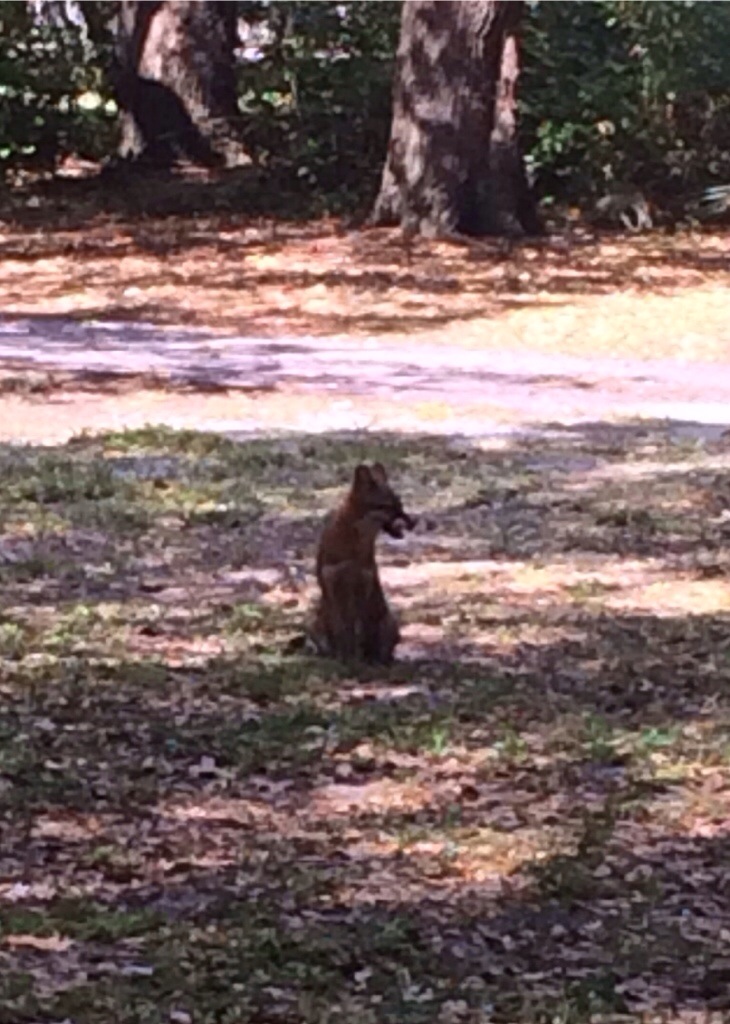
As I was using a Mala to aid in memorizing the sanskrit words by reciting the words out loud, ” Aum, yama, ahimsa, satya, esteya, brahmacharya, aparigraha, Niyama, sauca, santosa, tapas, svadhayaya, isvara pranidhana. Aum.” 108 times. I looked up and there was an animal sitting in front. It must have heard the chanting. At first, I was worried that the fox would attack. The red fox was curious, almost playful. I felt honored to have the visitor.
The Yoga Bride Week 22, March 28, 2014 Citta Vrtti Nirodhah
01 Apr 2014 1 Comment
in YOGA Tags: B.K.S. Iyengar, eight fold path, eight limbs, yogarosa

This picture represents my current state of consciousness. As in the book Light on Life, the water should be still and clear.
Monks that live in secluded monasteries. Yogis in their caves in the Himalayas. There! It is easier to find spirituality. Society is the real battle ground. Dog eat dog. Everyone is suffering in your face or in silence. Everybody encountered suffers and dies. A grotesque reality.
Being a home owner with a family can quickly take a person off the spirtual path due to mounting problems of daily living.
How long have we been on the reincarnation merry go round?
How do I know if I am progressing?
Why did I get off the path and how?
How do I resume the path?
Oh..Pantanjali help us humans.
The Yoga Bride, Week 17, February 21, 2013 The Joy of Yoga Is The Challenge
23 Feb 2014 Leave a comment
in YOGA Tags: B.K.S. Iyengar, scoliosis, setu bandha sarvangasana with a chair, yogarosa
On Wednesday, I went to an entry level yoga class. I was learning yoga but also was observing how the teacher instructed. There were three women, one in her late 70s, a middle aged women with scoliosis, her first yoga class, another middle aged women, and myself. At first, the class was sluggish until the last fifteen minutes. The instructor spoke firmly, but with kindness, and was protective of the students safety in each pose. We did ardha Chandrasana against a wall. It seemed to me an advanced pose. We did baddha konasana while sitting. Great pose.
Towards the end of class, we did a challenging pose, setu bandha sarvangasana but with our feet on the edge of a chair while grabbing the chair’s front legs. The woman with scoliosis praised the pose and said she felt better. She was new to yoga and I could tell she was hooked because she was asking when was the next class. I heard the 70 year old woman say she felt better. She was doing a the pose in a different way because of her age and ability. This class was the highlight of her week. The other woman seemed to appreciate the pose. Setu bandha sarvangasana was a pose that I value. The class end on a high note with everyone excited for the next class. As always, we finished the class with corpse pose, savasana.
The joy is experiencing improvement no matter how little or great it is. That is the joy of yoga for myself. Breaking through a plateau. Tiny improvements and not falling back.
The Yoga Bridge Week 15, Authentic Mexican Serapes
09 Feb 2014 Leave a comment
in YOGA Tags: B.K.S. Iyengar, home yoga practice, Iyengar Yoga, Serapes, yoga blankets, yoga props, yogarosa
I bought some yoga blankets this week. I decided that I wanted to have quality yoga props. My home yoga practice is an investment in myself. I ordered authentic Mexican blankets called Serape. The art of serape making goes back many centuries. The web page proclaimed that these blankets were manufactured by descendants of Mayan Indians of the Yucatan Peninsula of Mexico. I hope that was true and that everyone can profit.
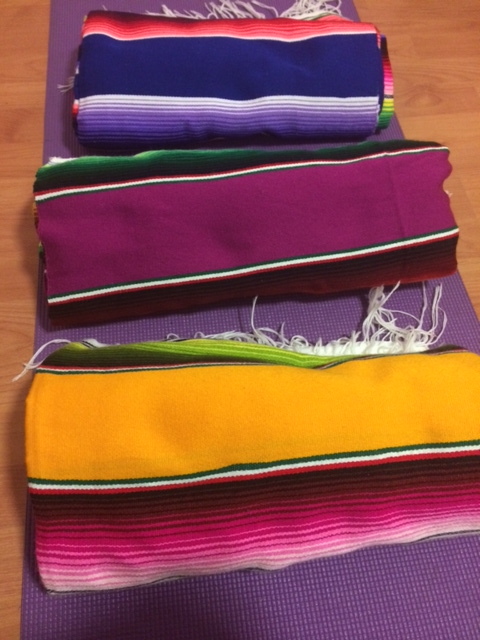
Here is my impression. These blankets are works of art, brilliant colors, and expertly woven. The cotton is soft. It is true that these serapes brighten the room and spirit. These serapes are different from the yoga blankets we use at the studio less soft and require different folding techniques.
http://www.stylemexican.com/mexican-blankets-sarapes.html
 The Yoga Bridge